
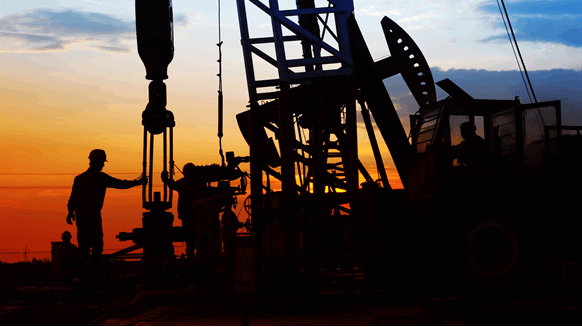
The total U.S. rig count decreased by one week on week and the total Canada rig count dropped by 20 during the same period, pushing the total North America rig count down to 729, comprising 552 rigs from the U.S. and 177 rigs from Canada, the count outlined.
Of the total U.S. rig count of 552, 538 rigs are categorized as land rigs, 12 are categorized as offshore rigs, and two are categorized as an inland water rigs. The total U.S. rig count is made up of 414 oil rigs, 131 gas rigs, and seven miscellaneous rigs, according to Baker Hughes’ count, which revealed that the U.S. total comprises 487 horizontal rigs, 53 directional rigs, and 10 vertical rigs.
Week on week, the U.S. land rig count dropped by one, and its inland water and offshore rig counts remained unchanged, Baker Hughes highlighted. The U.S. oil rig count rose by two week on week, its gas rig count dropped by two, and the U.S. miscellaneous rig count dropped by one week on week, the count showed. The U.S. horizontal rig count rose by two week on week, its vertical rig count dropped by two week on week, and the country’s directional rig count dropped by one week on week, the count revealed.
A major state variances subcategory included in the rig count showed that, week on week, North Dakota added three rigs, Oklahoma added two rigs, New Mexico added one rig, Utah, Colorado, and Wyoming each dropped two rigs, and Texas dropped one rig.
A major basin variances subcategory included in the rig count showed that, week on week, the Williston basin added three rigs, the Permian and Cana Woodford basins each added two rigs, the Granite Wash basin added one rig, the Ardmore Woodford basin dropped two rigs, and the DJ-Niobrara and Eagle Ford basins each dropped one rig.
Canada’s total rig count of 177 is made up of 114 oil rigs and 63 gas rigs, Baker Hughes pointed out. Week on week, the country’s oil rig count decreased by 17, its gas rig count dropped by two, and its miscellaneous rig count dropped by one, the count revealed.